Luxury brands do not price the way ordinary retailers do. Where mainstream pricing chases affordability and the perception of a deal, luxury pricing uses a high price itself as a strategic instrument—one that signals status, restricts access, and builds desirability. Understanding three core strategies—prestige pricing (including the Veblen effect), value-based pricing, and psychological anchoring—explains why a handbag or watch costs what it does, and what the brand is really selling.
Introduction: The Psychology of Luxury Pricing
The starting point is a distinction most shoppers never see. Conventional cost-plus pricing calculates production costs, adds a margin, and arrives at a selling price. As the luxury management institute Sup de Luxe frames it, that equation is "useful? Certainly. Sufficient for the luxury sector? In reality, not really." A luxury pricing strategy instead factors in perceived value: craftsmanship, heritage, desirability, reputation, scarcity, and the purchasing experience.
This means the customer is not simply paying for leather, gold, or hours of labour, in Sup de Luxe's formulation—they are buying everything the brand has built around those elements. Cost sets a floor; perceived value determines how far above that floor a brand can go. Marketing strategist Markus Kramer makes a similar point: while luxury companies do apply conventional strategies such as cost-plus or competitive pricing, they tend to do so only at lower price points "where rationality reigns high." At the top of the range, price works psychologically, not arithmetically.
Prestige Pricing and the Veblen Effect
Prestige pricing means deliberately setting prices significantly above competitors. As Zuora's pricing glossary explains, this technique "targets a specific segment of consumers who associate higher prices with superior quality and status," creating an aura of luxury around the offering. The high price is not an obstacle to purchase; it is part of the product.
The Veblen effect is the sharpest version of this logic. Sup de Luxe asks directly: why would a higher price make a product more attractive? Its answer is that a sufficiently high price can itself reinforce the perception that an object belongs to a different category—it "establishes distance and restricts access," and that exclusivity, in some cases, contributes directly to desirability. In other words, where normal demand curves slope downward, Veblen demand rises with price because the price is the status signal the buyer wants. Prestige pricing broadly trades on the association between high prices and quality; the Veblen effect is the specific case where the high price is the direct driver of demand.
Value-Based Pricing: Beyond Production Costs
Value-based pricing is the framework that makes all of this coherent. Rather than asking "what did this cost to make?", the brand asks "what is the total experience worth to the customer?" Sup de Luxe's analysis positions this as the decisive shift in premium pricing models: the price reflects everything the Maison has built—its story, its reputation, its scarcity—rather than a materials-and-labour calculation plus margin.
This is why two functionally similar products can carry wildly different prices. The premium is not a markup on inputs; it is the monetization of brand equity. Akshay Gupta, writing on luxury pricing for LCBS, describes the luxury market as defined not only by product quality but by "the intricate art of pricing," through which brands keep their products desirable and prestigious. Value-based pricing is that art in its most explicit form.
Psychological Anchoring in Luxury
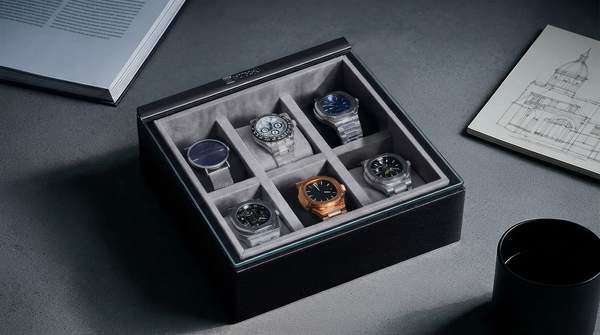
Anchoring is the one tactic luxury shares with general retail—but with the goal inverted. In mainstream e-commerce, anchors make a discounted item look cheap. In luxury, anchors make an expensive item look reasonable. Gupta's example illustrates the mechanism: if a luxury watch brand displays a $20,000 watch alongside a $10,000 model, consumers may view the latter as a bargain, increasing its desirability. Nothing about the $10,000 watch changed; the reference point did.
Luxury brands also invert the most familiar psychological trick of all. Where general retailers use charm pricing—$9.99 to feel like nine dollars—luxury brands round up to even numbers such as $1,000 instead of $999.99. Gupta notes that consumers associate round numbers with premium products, reinforcing the perception of exclusivity and quality. The same psychological sensitivity to price format points in opposite directions depending on what the brand wants the number to say.
Luxury Pricing Strategies: A Comparative Overview
The table below contrasts the three strategies across their core mechanisms, the psychology they target, and their effect on the brand. The comparison shows that each uses price differently: prestige pricing uses height, value-based pricing uses meaning, and anchoring uses context.
| Strategy | Core Mechanism | Target Consumer Psychology | Brand Impact |
|---|---|---|---|
| Prestige Pricing | Prices set significantly above competitors to create an aura of luxury and desirability | Consumers who associate higher prices with superior quality and status | Differentiates the brand and attracts affluent customers |
| Veblen Effect | Demand increases as price increases; the high price itself drives desirability | Desire for conspicuous consumption and status display | Exclusivity established through distance and restricted access |
| Value-Based Pricing | Price determined by perceived value—heritage, craftsmanship, reputation—rather than production costs | Willingness to pay for the total brand experience and equity | Monetizes everything the brand has built beyond the product itself |
| Psychological Anchoring | High-priced items presented first to set a benchmark, making other premium options feel attainable | Reference-point reasoning: a $10,000 watch looks like a bargain beside a $20,000 one | Enhances perceived value across the range without discounting |
Read together, the rows reveal the common thread: in every strategy, price communicates rather than merely charges. That is the fundamental difference from general retail, where price is optimized to remove friction; in luxury, a degree of friction is the point.
The Pillars of Perceived Value: Heritage, Craftsmanship, and Reputation
None of these strategies works without substance behind the number. Sup de Luxe's list of what luxury pricing must factor in—craftsmanship, heritage, desirability, reputation, scarcity, and the purchasing experience—describes the raw material of perceived value. Heritage gives the price a history; craftsmanship gives it a justification; reputation gives it credibility with buyers who cannot inspect the product themselves.
Scarcity and the purchasing experience deserve particular attention because they are manufactured, not inherited. A brand controls how many units exist and how the sale feels, and both feed directly into the exclusivity that prestige pricing promises. This is also the strategy's vulnerability, as Sup de Luxe's framing implies: the promise behind the price "had better be convincing." If the perceived value collapses—if heritage rings hollow or quality disappoints—the premium becomes indefensible, because it was never anchored in cost.
Making Informed Luxury Choices
When evaluating luxury purchases, consumers should recognize that the price reflects not just material cost, but a deliberate strategy to signal status, exclusivity, and perceived value. The observable signal is the consumer's ability to identify specific pricing tactics—reading a high price as a status symbol, or spotting a "bargain" engineered by anchoring within a luxury range—and to understand the underlying psychological intent of the brand. A shopper who can ask "is this price communicating prestige, monetizing brand equity, or setting an anchor for the item beside it?" is no longer reacting to the number; they are decoding it. That decoding skill, applied the next time a $20,000 watch makes a $10,000 one feel reasonable, is the practical test of understanding luxury pricing.