BrandDeepDive
Brand SpotlightsProduct ReviewsTop ListsComparisonsBuying Guides
BrandDeepDive

Uncovering the stories behind the brands we love.

BrandDeepDive offers in-depth reporting and analysis on the world's most influential brands. From product reviews to industry trends, we provide insights that empower consumers and inform business leaders.

Sections

  • Brand Spotlights
  • Product Reviews
  • Top Lists
  • Comparisons
  • Buying Guides
  • Beauty
  • Industry Picks

Writers

Meet our writers →

Trending Topics

2026ProductivitySkincareRemote WorkFuture Of WorkHybrid ModelAiBookkeeping

About

  • About
  • Editorial Standards
  • Corrections
  • AI & Automation
  • Contact
  • Privacy Policy
  • Terms of Service

© 2026 BrandDeepDive. All rights reserved.

  1. Home
  2. /Industry Picks
  3. /China Reduces Tariffs on Broad US Farm Goods, Maintains Soybean Duties
Industry Picks

China Reduces Tariffs on Broad US Farm Goods, Maintains Soybean Duties

China has reduced tariffs on a wide range of U.S. agricultural products, including corn and wheat, but notably excluded soybeans, which will continue to face additional duties. This move is linked to China's commitment to purchase $17 billion in U.S. farm goods annually.

NK
Nina Kapoor

September 28, 2026 · 2 min read
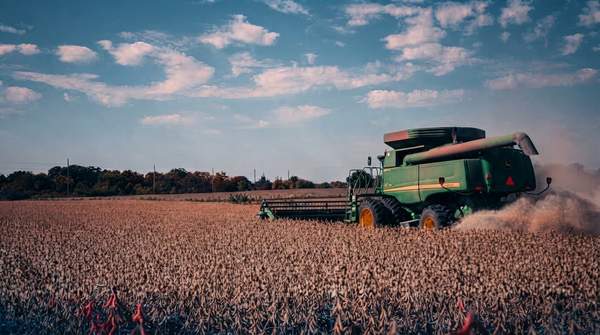
Editorial illustration for China Reduces Tariffs on Broad US Farm Goods, Maintains Soybean Duties
Beijing announced tariff reductions on a wide array of U.S. agricultural products, including corn, wheat, meat, and dairy, following last week's summit between leaders Xi Jinping and Donald Trump. Notably, soybeans, a major U.S. agricultural export, remain excluded from the tariff cuts and will continue to face additional duties. The move is part of a larger $60 billion package of reciprocal tariff reductions.

Specific Products Benefiting from Tariff Reductions

The tariff-reduction list, jointly issued by China's commerce ministry and the White House, covers a broad range of U.S. farm goods. Products set to benefit include corn, wheat, meat, and dairy. Further details from the commerce ministry statement specify that sorghum, vegetable oils and meals (such as soyoil and soymeal), along with other meat and dairy products, are also included. More than 90% of these covered products will be exempt from all additional tariffs previously imposed, reverting instead to most-favored-nation (MFN) tariff rates. The proposal identifies the products but does not specify an effective date for the tariff cuts.

The Continued Exclusion of Soybeans

Despite the broad tariff reductions, soybeans, a top U.S. import item for China, are explicitly excluded from the new list. This means U.S. soybeans will continue to face an additional 10% tariff, a rate that traders have warned is too high for private Chinese crushers to absorb. The exclusion of soybeans is politically significant, as they were central to past trade disputes between the two nations.

Implications for the $17 Billion Purchase Commitment

The agricultural tariff cuts are linked to a White House statement regarding China's commitment to purchase $17 billion in U.S. farm goods annually through 2028. While the White House announced this target in May, China has not yet officially confirmed any specific target for such purchases. Trade in the agricultural products on the new tariff-reduction list, excluding soybeans, amounted to approximately $17 billion in 2024, according to Reuters calculations, roughly matching the reported commitment. An anonymous trader indicated that state-run companies will continue to buy U.S. soybeans, and the tariff cuts on other goods are expected to help China meet the $17 billion commitment.

Reasons Behind the Soybean Exclusion and Market Impact

The decision to exclude soybeans from the tariff cuts reflects China's dual strategy in trade relations. Analysts suggest that while Beijing aims to show good-faith efforts to improve relations and support U.S. farmers, it also seeks to maintain leverage and avoid appearing to make unilateral concessions. Soybeans have historically been a politically charged commodity in U.S.-China trade. The continued 10% additional tariff on U.S. soybeans means that private Chinese crushers will still face higher costs, potentially limiting their ability to purchase U.S. soybeans compared to state-owned enterprises. This situation could lead to negative margins for private crushers, as the landed cost for U.S. and Brazilian beans is roughly $595 per ton without tariffs, with Brazilian soybeans often preferred for their higher oil and protein content. Following the announcement, the most-active soybean contract on the Chicago Board of Trade (CBOT) saw a 1.38% decline.

Sources

  • China to cut tariffs on US farm goods, but list excludes soybeans — Merced Sun-Star
  • China to cut tariffs on US farm goods, but list excludes soybeans - AOL — AOL.com

Tags

China TariffsUs AgricultureSoybeansTrade WarTariff Reductions
NK

Nina Kapoor

Editorial byline

Nina Kapoor is an editorial byline for BrandDeepDive, with a focus on Industry Picks, Top Lists, Emerging Trends. Biographical credentials and external profiles are published only after verification.

More from Industry Picks

Diverse consumers in a marketplace, examining ethical product labels, with a futuristic cityscape symbolizing 2026 purchasing decisions.

Conscious consumerism redefines brand loyalty, impacting 2026 purchasing decisions.

During the early months of the COVID-19 pandemic, a study in Bogota, Colombia, found that customers who perceived brands as ethical expressed high commitment intention.

Nina Kapoor· Sep 20
Futuristic cityscape with data streams and people interacting with personalized holographic displays, representing AI personalization.

What is AI Personalization vs. Segmentation in 2026?

Companies that excel at personalization generate 40% more revenue from it compared to their slower-growing counterparts, according to TheDataExperts .

Victor Hale· Sep 19
Split image: overflowing landfill with plastic waste contrasted with a green landscape featuring innovative, biodegradable packaging solutions.

What are sustainable packaging materials and their environmental impact?

Despite 14% of plastic packaging being collected for recycling, only a paltry 2% is effectively recycled, leading to billions in economic loss and persistent environmental damage, according to...

Nina Kapoor· Sep 18
A visual representation of psychological biases influencing consumer decisions versus ethical marketing practices building brand trust.

What Are Psychological Biases Affecting Brand Loyalty and Ethical Marketing?

Despite a deadly product tampering crisis, Tylenol's sales rebounded to pre-incident levels within a year due to radical transparency and swift ethical action.

Stella Moreno· Sep 18

Trending Now

1
How Sovereign Ledger Improves Transaction-Backed Discourse With 3 Core Principles

How Sovereign Ledger Improves Transaction-Backed Discourse With 3 Core Principles

Technology· 15 views
2
The Be Your Own Magic™ Hoodie Carries “Your Story Isn’t Over” Into the World

The Be Your Own Magic™ Hoodie Carries “Your Story Isn’t Over” Into the World

Fashion· 12 views
3
A male hand buttons a shirt with buttons on the right, while a female hand buttons a shirt with buttons on the left, illustrating the gendered difference.

Why Do Men's and Women's Clothes Have Different Button Sides?

Fashion· 9 views
4
The 5 Things Faith-Based Shoppers Love About Daholyvine

The 5 Things Faith-Based Shoppers Love About Daholyvine

Fashion· 6 views
5
Editorial illustration for Blue Buffalo Unveils AI Tool for Dog Food Comparisons

Blue Buffalo Unveils AI Tool for Dog Food Comparisons

Brand Spotlights· 6 views
6
An abandoned display shelf for Covey Skincare products, symbolizing the brand's abrupt closure due to market challenges and a funding freeze.

Covey Skincare Faces Funding Freeze Amidst Market Headwinds

Beauty· 4 views