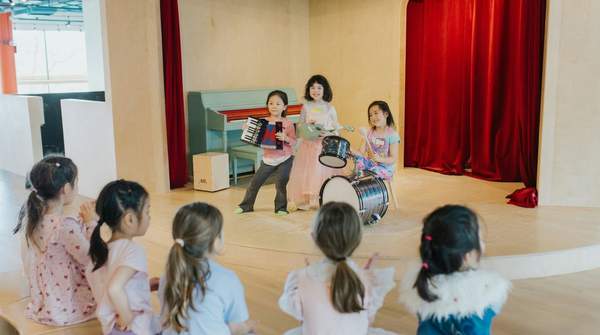
A toddler hears the opening notes of a familiar song and starts moving before anyone has finished the first line. Another child claps along, occasionally on the beat, while someone else is far more interested in making their own sound.
Music invites that kind of spontaneous participation, and Musical Storytime at Liliput Playhouse gives it an artistic setting. Part of the Early Childhood Club, the programme brings together rhythmic storytelling, singing, instrument play, gentle dancing, and clapping, with inspiration drawn from folklore, lullabies, and natural sounds.
A Story Can Begin With Rhythm
Stories hold an interesting place in early childhood because children can participate long before they follow every detail of a narrative. A repeated sound, a shift in rhythm, or a familiar musical phrase can become something they recognise and respond to.
Liliput’s Musical Storytime combines storytelling with rhythm, bringing spoken narrative and music into the same experience. Instead of separating story time from musical activity, the programme treats sound as part of how the story is encountered.
That creates opportunities for children to respond in different ways. Some may be drawn to the storyteller’s voice, while others become interested when a familiar rhythm returns or the group begins singing.
The session gives storytelling a more participatory character. Children can listen, move, vocalise, and join in as the experience unfolds around them.
Folklore Gives the Music a Sense of Imagination
Folklore is one of the creative inspirations behind Musical Storytime. Its connection to stories passed through generations fits Liliput’s wider interest in art, childhood imagination, and experiences shared between people.
Folklore offers an inviting creative territory because it belongs as naturally to storytelling as it does to music. Songs, characters, repeated phrases, and familiar narrative patterns can all contribute to the atmosphere of a musical session.
Liliput also draws inspiration from lullabies, another form of music associated with early childhood and shared human experience. Their place in the programme’s artistic vision gives Musical Storytime a gentler dimension alongside its more energetic activities.
The class does not need to become a formal lesson about musical traditions to express these influences. Folklore and lullabies help establish the creative character of an experience designed for very young children.
Singing Makes Participation Feel Natural
A toddler does not need to sing every word to enjoy a song. Joining in might mean repeating a sound, recognising a refrain, moving at the right moment, or making a wonderfully enthusiastic contribution that follows no musical instruction whatsoever.
Singing is one of Musical Storytime’s central activities. It creates a shared experience in which children can participate at different levels without everyone needing to produce the same response.
The adult voice has a place in that atmosphere too. Musical experiences can become moments of connection between children and the grown-ups accompanying them, particularly when a familiar melody invites everyone to join in.
That social quality gives the class some of its warmth. The group experiences music together, with individual voices and responses forming part of the activity rather than interrupting it.
Instruments Put Sound Into Little Hands
Singing invites children to use their voices, while instruments introduce another way to participate. Instrument play is part of Liliput’s Musical Storytime, giving young children opportunities to engage with sound through physical activity.
The appeal lies partly in the relationship between action and sound. Making a movement and hearing a response creates a direct experience that can hold a toddler’s attention.
The instructor-led setting brings those individual responses into a shared musical activity. Children can listen to sounds around them, contribute their own, and encounter the experience of playing alongside others.
That gives instrument play a different character from simply hearing recorded music. Young children become active participants in the sounds being created during the session.
For a child who enjoys making noise, Musical Storytime gives that enthusiasm a welcome place. The sounds belong to a guided creative activity rather than arriving as an unexpected soundtrack to the afternoon.
Clapping and Dancing Give Rhythm a Body
Musical Storytime also includes clapping and gentle dancing. These activities bring movement into the musical experience without turning the session into a gymnastics class.
A child may clap enthusiastically, sway while listening, or begin dancing when a particular rhythm catches their attention. Those responses give the group another way to participate alongside singing and instrument play.
Clapping introduces a simple physical action that can accompany the music. Dancing lets children respond through larger movements, creating a change in energy from the more focused moments of listening.
The contrast keeps the session varied. Storytelling draws attention towards narrative, instruments invite sound-making, and gentle dancing gives children another form of expression.
That combination fits Liliput’s creative philosophy particularly well. Art can be experienced through voices, movement, sound, and shared imagination, with each activity contributing something different to the class.
Natural Sounds Add Another Layer of Inspiration
Alongside folklore and lullabies, Liliput names natural sounds as inspiration for Musical Storytime. That connection brings the programme into the wider world of rhythms children may encounter beyond a classroom.
Rain, birdsong, wind, and other familiar sounds provide examples of how varied the natural soundscape can be. They offer a rich imaginative background for thinking about music as something encountered in everyday life.
The programme’s artistic direction draws on that relationship between sound, nature, and childhood experience. It gives Musical Storytime a more distinctive identity than a class organised entirely around practising familiar nursery songs.
For families attracted to Liliput’s broader mission, the theme feels consistent with its approach. The venue brings different artistic experiences into childhood play, leaving room for children to respond through their own curiosity.
Musical Storytime Belongs to the Early Childhood Club
Liliput’s Early Childhood Club includes art, movement, sensory exploration, cooking, and music-based programmes. Each gives young children a different form of hands-on experience within the same wider artistic philosophy.
Musical Storytime occupies the sound-and-storytelling part of that offering. A family interested in music can select an experience centred on listening, singing, instruments, and gentle movement rather than a visual-art workshop or physical obstacle course.
The programme is currently geared towards children ages 1 to 3.5. Its activities suit the early-childhood stage through participation that can begin with a simple sound or movement.
Current sessions take place at Gulliver Playstudio, the fourth-floor play world within Liliput’s Avenue Road venue in Toronto. Gulliver’s wider identity centres artistic movement, while Musical Storytime gives families a guided music experience within that setting.
Forty-Five Minutes of Music and Another Hour to Play
The current Musical Storytime format combines a 45-minute class with an additional hour of drop-in play. Families therefore have time for the guided musical experience and a separate opportunity to enjoy the play environment.
That arrangement gives the visit two distinct parts. During Musical Storytime, attention centres on songs, storytelling, instruments, clapping, and gentle dancing; during the additional play hour, children can follow their interests more freely.
Liliput’s fall programme includes Monday and Thursday Musical Storytime sessions. Registration is offered through the Early Childhood Club, with late-entry pricing calculated according to the remaining programme sessions.
The class also has a specific missed-session arrangement. Families who miss a class do not receive a makeup session or refund, but Liliput offers one complimentary drop-in play visit per child, per programme, for a missed class.
Those arrangements support a recurring class experience rather than treating Musical Storytime as an isolated entertainment booking. Families can return to the guided creative setting while their children become familiar with the class environment.
Frequently Asked Questions
What ages is Musical Storytime at Liliput Playhouse for?
Musical Storytime at Liliput Playhouse is currently geared towards children ages 1 to 3.5. The programme is part of the Early Childhood Club and combines music, stories, and gentle movement for young children.
What activities are included in Liliput Playhouse Musical Storytime?
Liliput Playhouse Musical Storytime includes rhythmic storytelling, singing, instrument play, gentle dancing, and clapping. Folklore, lullabies, and natural sounds provide inspiration for the artistic experience.
Where does Liliput Playhouse hold Musical Storytime?
Liliput Playhouse currently holds Musical Storytime at Gulliver Playstudio on the fourth floor of its Avenue Road venue. The class is a guided Early Childhood Club programme within Liliput’s wider artistic play offering.
How long does a Liliput Playhouse Musical Storytime session last?
Liliput Playhouse Musical Storytime includes a 45-minute guided class and an additional hour of drop-in play. The format combines focused musical activities with separate time for open-ended exploration.
What happens if a child misses a Liliput Playhouse Musical Storytime class?
Liliput Playhouse does not provide makeup classes, credits, or refunds for individual absences. It offers one complimentary drop-in play visit per child, per programme, for a missed class.
Let Music Become Part of Their Play
A song can begin with a voice, a story can gather rhythm, and a child can join the experience through clapping, movement, or an instrument. Musical Storytime brings those possibilities together within Liliput’s artistic approach to early childhood.
For families drawn to sound, stories, and shared creative experiences, the programme offers a distinctive way to spend time together. Book Musical Storytime at Liliput Playhouse and give your child a place to sing, listen, move, and join in.