If you want to cut through skincare marketing during a major sale, the most reliable move is to shop by ingredient, not by brand or discount sticker. A cost-based analysis of anti-aging products across four major United States retailers, published by the National Center for Biotechnology Information (NCBI), identifies four cosmeceutical ingredients as having "the most evidence-based data on photoaging prevention and treatment": retinol, vitamin C (topical ascorbic acid), niacinamide, and sunscreen. Learn what each one does, and you can evaluate any discounted product on its merits.
The Science Behind Anti-Aging Skincare: Key Ingredients
The NCBI analysis centers on photoaging—a form of extrinsic aging caused by sun exposure—which it says "can be ameliorated by applying sunscreen and retinol products." That framing matters for shoppers: the evidence behind these ingredients is specifically about preventing and treating sun-related skin aging, not every sign of aging imaginable.
The remaining two ingredients work on the process underneath that damage. According to the same analysis, "topical ascorbic acid and niacinamide have been shown to target the oxidative stress process that contributes to photoaging." In other words, vitamin C and niacinamide address a chemical driver of skin aging rather than acting only as surface-level protectors.
Retinol, meanwhile, is the cosmeceutical workhorse. A review of retinoids published by NCBI notes that "retinol is most frequently used in cosmeceutical treatment" and that it is "very stable in product formulations and well tolerated." Over-the-counter retinoid products typically contain precursor molecules that the skin converts into retinoic acid, the biologically active form.
Anti-Aging Ingredient Guide: Match Ingredients to Your Concerns
To use this guide, first identify your primary concern—texture and sun-related aging, oxidative stress and dullness, or preventing further sun damage—then check which ingredient the evidence links to that concern. The table classifies each of the four evidence-backed ingredients by its targeted signs of aging and its mechanism of action, drawing on the NCBI cost analysis and supporting retinoid research.
| Ingredient | Primary Target Concerns | How It Works |
|---|---|---|
| Retinol | Photoaging; skin texture | Retinoic acid, its active metabolite, stimulates rapid cell turnover that helps shed dead skin |
| Vitamin C (ascorbic acid) | Oxidative stress contributing to photoaging | Applied topically, ascorbic acid targets the oxidative stress process |
| Niacinamide | Oxidative stress contributing to photoaging | Applied topically, niacinamide targets the oxidative stress process |
| Sunscreen | Photoaging; extrinsic aging from sun exposure | Ameliorates photoaging when applied |
Two practical notes on reading this table. First, retinol's turnover effect comes with a documented trade-off: retinoic acid "can sometimes lead to unwanted side effects such as dryness and peeling," as Lori Youmshajekian reports at Scientific American. Second, the sources do not establish effective concentration ranges for vitamin C or niacinamide, so a product listing either ingredient is not automatically a strong product—formulation matters, and the presence of the ingredient is the starting point of your evaluation, not the end.
Finding These Ingredients on the Label: Why Serums Deliver
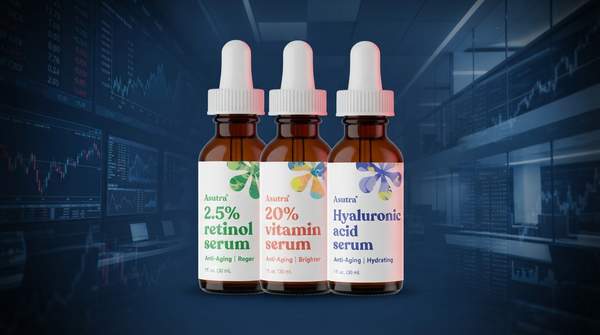
Once you know your target ingredient, the next skill is spotting it in a product format that actually delivers it. Facial serums are a common vehicle for concentrated actives, and their defining feature is exactly what an anti-aging shopper wants: they are formulated to deliver a high concentration of one or a few active ingredients, rather than spreading actives thinly across a heavier cream base.
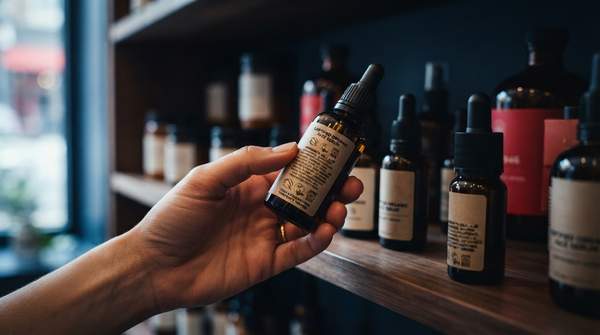
To find the four ingredients, read the ingredient list rather than the front of the bottle. Look for retinol (sometimes labeled as a retinoid or retinyl ester, the precursor molecules that convert to retinoic acid), ascorbic acid for vitamin C, niacinamide (also called nicotinamide in some listings), and—in a daytime product or as a standalone—a broad-spectrum sunscreen.
A useful rule of thumb: cosmetic ingredient lists are ordered by descending concentration in most jurisdictions, so an active near the top of the list is present in more meaningful amounts than one buried near the end with the preservatives. Marketing language on the packaging—"advanced," "clinically inspired," "youth-activating"—is not part of the evidence base; the ingredient list is.
The Essential Role of Photoprotection in Anti-Aging
Of the four ingredients, sunscreen is the one the evidence frames as foundational rather than optional. The NCBI analysis defines photoaging as "a form of extrinsic aging from sun exposure" and states plainly that applying sunscreen "can ameliorate" it. Because photoaging is caused by an external, ongoing exposure rather than an internal process, prevention is uniquely effective: no serum can undo damage that daily sun exposure keeps adding.
This has a direct consequence for how you spend during a sale. A discounted retinol or vitamin C serum delivers targeted treatment, but without a dedicated sunscreen in the routine, you're treating damage while continuing to accumulate it. The practical order is to secure the sunscreen first, then add a targeted active—retinol for texture and cell turnover, or vitamin C or niacinamide for oxidative stress—based on the concern you're trying to address.
That is also why the scope of this guide is deliberately narrow. It covers only the four ingredients the NCBI cost analysis identified as having the most evidence-based data on photoaging, not every popular anti-aging compound, and it does not recommend specific brands, prices, or discount percentages—those change with each sales event, while the underlying evidence does not.
Your Next Step: Informed Skincare Shopping
Prioritize anti-aging skincare products that clearly list retinol, vitamin C, niacinamide, or sunscreen as active ingredients, especially in serum formulations, and always include photoprotection in your daily routine.
The measurable indicator that this approach has worked is simple: the reader successfully identifies and purchases a new skincare product containing one of the four evidence-backed ingredients, or integrates a dedicated sunscreen into their routine. Whichever sale you're shopping, that label-reading habit—ingredient and concentration position first, marketing claims last—will outlast any single discount cycle.