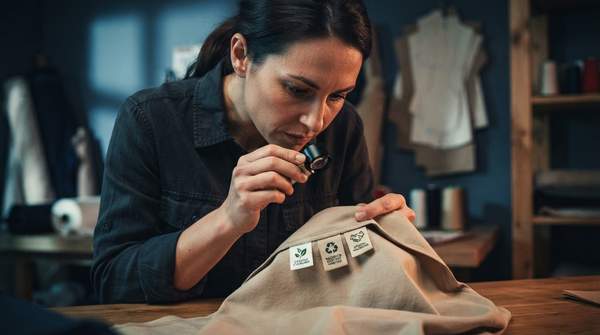
No single certification covers everything. That is the central fact a shopper needs before trusting a label on a garment tag: each common sustainability certification verifies a different slice of the supply chain, whether that is the organic status of the fiber, the chemical safety of the finished garment, the treatment of workers, or the environmental practices of leather tanneries. A GOTS label tells you nothing about chemical testing of the final product, and an Oeko-Tex label tells you nothing about farm wages. The practical skill is matching the label to the claim you care about, then looking past it to what the brand discloses about its own supply chain.
Decoding Sustainable Fashion Certifications
Certifications exist because sustainability claims are otherwise unverifiable. As the ethical fashion ratings platform Good On You explains in its guide to certification labels, these systems vary fundamentally in structure: some apply to products, some to factories or other facilities, and some are designed to be adopted by a brand and applied across all or part of its supply chain. They can cover fabrics, labor rights, chemical and water management, and more.
The same source notes a second variable that matters just as much as scope: the method of assurance. Compliance is checked differently across systems, with varying requirements for transparency, auditing, and other verification approaches. Two labels that sound similar on a hangtag may rest on entirely different evidentiary foundations, which is why knowing a certification's name is only the first step.
The comparison below is limited to four widely encountered systems — GOTS, Oeko-Tex Standard 100, Fairtrade, and the Leather Working Group — selected because clear evidence about their scope is available. It is not an exhaustive directory of every label a shopper might see, and nothing here rates one certification as better than another. They simply answer different questions, and a garment may legitimately carry none, one, or several of them.
Certification Comparison: What Each Label Verifies
The table below categorizes each certification by what it actually certifies — a material, a process, or a set of working conditions — and distills the key distinction a consumer needs at the point of purchase.
| Certification | What It Certifies | Primary Focus | Key Consumer Takeaway |
|---|---|---|---|
| Global Organic Textile Standard (GOTS) | Organic fibers and their processing throughout the textile supply chain | Ecological and social criteria, from raw material harvesting through manufacturing | Verifies the organic status of the material and how it was processed — not chemical testing of the finished garment |
| Oeko-Tex Standard 100 | Textile raw materials, intermediate products, and end products | Chemical safety of the final product | Confirms the item you hold was tested for harmful substances — not that the fiber was organic or that workers were fairly paid |
| Fairtrade Textile Standard | Working and trading conditions across the textile supply chain, including registered and audited subcontractors | Wages, working conditions, and fair terms of trade | Verifies social and economic standards for people — not the environmental profile of the material itself |
| Leather Working Group (LWG) | Traders in leather supply chains | Traceability, operations, and waste management | Indicates responsibly sourced leather — not organic fibers or garment-level chemical testing |
The clearest contrast is between the first two rows. GOTS stipulates requirements throughout the supply chain for both ecology and labor conditions in textile manufacturing using organically produced raw materials, per the standard's description as catalogued by Cornell University's library guide to sustainable fashion standards. Its guarantee runs from the field to the factory: the material is organic, and its processing met environmental and social benchmarks.
Oeko-Tex Standard 100 works in the opposite direction. According to the same Cornell guide, it is an independent testing and certification system for textile raw materials, intermediate products, and end products, available at all stages of production. MATE the Label, a brand that publishes consumer explanations of these systems, describes it more bluntly: the final product was tested to confirm it is free from over 3,000 different toxic chemicals, making it a safer option for consumers' health. That is a genuine and useful guarantee — but it says nothing about whether the cotton was organic or whether the workers who made the garment earned a living wage.
Fairtrade occupies the social side of the framework. The Fairtrade Textile Standard, as its issuer describes it, aims to facilitate change in the textile sector by engaging manufacturers and workers to bring about better wages and working conditions, and by engaging brands to commit to fair terms of trade. Its criteria apply to all production stages, require all supply chain actors including brands to establish fair, reliable, and predictable contract arrangements, and mandate that every subcontractor be registered and agree to audits.
A related academic analysis of the system, published by researchers examining Fairtrade certification, characterizes Fairtrade International as coordinating one of the most socially ambitious certifications in the agro-food sector, promoting the well-being and empowerment of disadvantaged small farmers and workers in the Global South. Fair Trade USA, which operates a related factory-level program, also publishes a public map of its certified factories with Open Supply Hub, offering a concrete example of transparency infrastructure.
The Leather Working Group rounds out the comparison for a specific material category. Per MATE the Label's consumer guide, traders in leather supply chains can be LWG-certified by adhering to standards in traceability, operations, and waste management, and LWG-certified pieces are made from responsibly sourced leather.