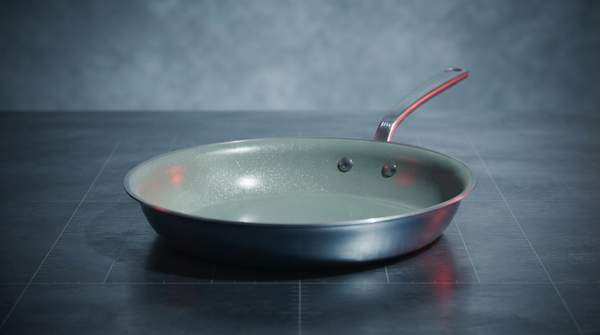
If you are replacing traditional nonstick pans, the practical choice comes down to matching a material to how you actually cook. Ceramic-coated cookware is likely the best option if you want a nonstick surface without "forever chemicals," according to chef-reviewed reporting from Organic Authority, while stainless steel is widely regarded as safe and non-toxic for everyday use, as a kidney-health-focused guide from NephCure puts it. Carbon steel is another safe, versatile option depending on your cooking style, per The Good Trade, and anodized aluminum is generally considered a safer choice than uncoated aluminum because the hardened surface reduces the risk of aluminum leaching. This guide compares all four across safety, performance, and maintenance so you can pick with confidence.
Exploring Non-Toxic Cookware Alternatives
The concern driving the shift away from conventional nonstick pans is a family of chemicals known as PFAS—per- and polyfluoroalkyl substances, often called "forever chemicals" because they break down extremely slowly in the environment and can persist in the body. Traditional nonstick coatings such as Teflon rely on PTFE (polytetrafluoroethylene), the fluorinated polymer that gives the pan its slippery surface, and older production processes used PFOA (perfluorooctanoic acid), a PFAS compound that has drawn heavy regulatory and public-health scrutiny. As a kidney-health organization's guide explains, certain cookware like non-stick pans can release harmful chemicals when exposed to heat due to the materials they are made with.
Organic Authority's reporting notes that PFAS chemicals used in conventional nonstick production are under heavy scrutiny concerning public health issues, and that the manufacturing process for ceramic-coated cookware is more environmentally friendly than traditional nonstick for that reason—the absence of PFAS chemicals. That same reporting describes a related replacement compound, GenX, and suggests—citing a study, not as settled fact—that it may be even more toxic than PFOA. The takeaway for shoppers is not that every nonstick pan is an immediate hazard, but that the coatings of concern are fluorinated ones, and the alternatives below avoid them.
Four materials dominate the non-toxic conversation. Ceramic-coated cookware uses a mineral-based sol-gel coating instead of PTFE to achieve its release properties. Stainless steel is a durable, corrosion-resistant alloy with no coating to degrade. Carbon steel is a bare iron alloy that develops natural nonstick properties through seasoning, much like cast iron but lighter. Anodized aluminum is aluminum that has been electrochemically hardened into a non-reactive surface layer. Each avoids the fluorinated chemistry of traditional nonstick, but they differ meaningfully in how they cook and how much care they demand.