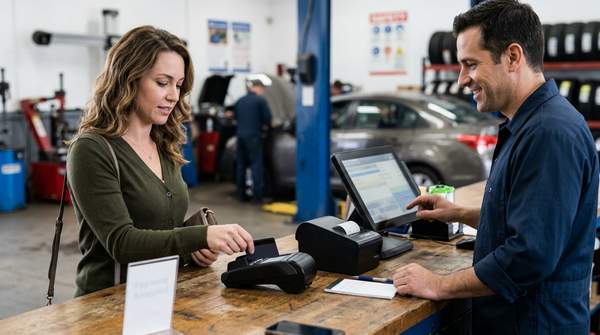
Auto repair shops handle a wide range of transactions, from routine maintenance and tire replacements to more extensive repairs with substantial invoices. Customers expect clear estimates, convenient payment options, and accurate receipts, while shop owners need a reliable way to collect payments and manage transaction records.
PayTrac offers payment processing and POS solutions that automotive businesses can evaluate against such day-to-day requirements.
Choosing a payment provider should involve more than comparing transaction rates. Repair shops need to consider how payments fit into service-advisor workflows, which devices suit the shop floor and front counter, and how transaction information connects with existing business software. A suitable setup can make payment collection more consistent without disrupting the work involved in servicing vehicles.
Understand How Payments Move Through the Shop
An automotive business may collect payments at several points during a service visit. A customer might pay a diagnostic fee, approve additional work, settle a repair invoice, or return to resolve an outstanding balance.
Each transaction needs to be handled accurately. Staff must understand the amount due, confirm the payment, provide a receipt, and ensure the transaction is reflected in the shop's records. If these steps rely on disconnected tools or inconsistent procedures, administrative work can become unnecessarily complicated.
Start by documenting the existing process. Identify where customers pay, which employees handle transactions, and how payment information reaches the accounting system. Review common problems, including duplicate entries, delayed reconciliation, and difficulty locating transaction records.
This assessment helps determine whether the shop needs new terminals, better reporting, software integration, or a different payment pricing arrangement.
Select Equipment for the Shop Environment
Not every automotive business has the same checkout setup. An independent repair shop may process most payments at a service counter, while a larger facility may need devices at multiple workstations. Tire shops and dealerships may also have different traffic patterns and staffing arrangements.
PayTrac promotes payment acceptance options that include countertop terminals, wireless devices, and mobile solutions. The appropriate configuration depends on how the business serves customers and where transactions take place.
Consider whether the equipment can accept the payment methods customers commonly use, including contactless payments where supported. Confirm connectivity requirements, receipt options, device replacement procedures, and the availability of technical support.
A mobile terminal may be useful in certain environments, but it should be selected because it solves a practical problem rather than simply because it is available. Staff must be able to use the equipment reliably, and the checkout process must remain clear and consistent.
Evaluate Integration With Automotive Software
Many automotive businesses rely on shop management or dealership management software to coordinate estimates, repair orders, invoices, inventory, and customer records. Payment processing should fit into this environment as cleanly as possible.
PayTrac's automotive materials discuss payment solutions for automotive businesses and reference dealership management system integrations. Before choosing a solution, confirm whether the specific software used by the shop is supported and which functions are available.
Ask how transactions are associated with repair orders and customer accounts. Clarify whether payment details transfer automatically, whether staff must enter information manually, and how refunds or adjustments appear in the relevant records.
Do not assume that a general integration statement guarantees compatibility with every software version or configuration. Request a demonstration using a representative transaction and ask who will handle setup and troubleshooting.
The purpose is to reduce unnecessary duplication while preserving accurate records of work completed and payments collected.
Review Processing Costs With Actual Transaction Data
Processing costs can affect an automotive business differently depending on its transaction volume and average invoice value. A shop handling numerous smaller services may have a different cost profile from a facility processing fewer, higher-value repair invoices.
Review several recent processing statements. Identify recurring fees, transaction charges, equipment costs, and other account expenses. Compare the information with the shop's actual payment patterns rather than relying on a headline rate.
PayTrac offers traditional pricing, cash discounting, and surcharging programs. Each has different mechanics, so the shop should evaluate the available options carefully.
Traditional pricing involves paying fees under the agreed processing arrangement. Cash discounting offers a discount for cash payment under a clearly communicated pricing structure. Surcharging adds a permitted charge to eligible credit card transactions and is subject to applicable rules.
Before choosing either cash discounting or surcharging, confirm the relevant requirements and how the arrangement will appear on estimates, invoices, displays, and receipts. The selected POS configuration must support the program correctly.
Maintain Clear Customer Communication
Vehicle repairs can involve changing estimates and additional work, which makes transparent communication important. Customers should understand the approved work, the final invoice, and the payment methods available before completing the transaction.
If the shop introduces a cash discount or surcharge program, explain the pricing arrangement clearly and consistently. Signs and customer-facing information should match the actual checkout process and comply with applicable requirements.
Employees should know how to answer questions without improvising explanations about fees. A short, consistent explanation can help prevent misunderstandings, while clear invoices allow customers to distinguish repair charges from payment-related adjustments.
The business should also review how refunds and disputed transactions are handled. Establish who can authorize adjustments, what documentation is required, and how the final transaction is reflected in the shop's records.
Improve Reporting and Reconciliation
Accurate payment records help shop owners review revenue, investigate discrepancies, and reconcile deposits. The process becomes harder when transactions are scattered across terminals, software systems, and manual records.
Ask what reporting features are available through the proposed payment setup. Relevant capabilities may include transaction searches, date filters, refund records, exports, and access controls for authorized employees.
PayTrac describes merchant portal access and transaction reporting among its payment processing services. An automotive business should confirm which features are included and whether the available information fits its accounting procedures.
Settlement timing is another consideration. Ask when deposits are expected, what cutoff times apply, and which conditions may affect funding. Clear terms help the business plan around payment receipts without assuming that every transaction will settle on the same schedule.
Prepare the Team Before Going Live
A new payment system should be tested before it becomes part of the shop's daily routine. Run representative transactions, check receipt generation, test refunds, and confirm that reporting and any supported integrations work as expected.
Train service advisors and other employees on the equipment and the procedures relevant to their roles. Explain how to handle failed payments, duplicate transactions, and customer questions about pricing.
Designate a person responsible for contacting the provider when problems arise. Keep instructions accessible so that staff can follow the same process across shifts.
After launch, review recurring issues and employee feedback. Addressing small operational problems early can prevent them from becoming persistent sources of delay.
Find a Payment Setup That Fits Your Shop
Automotive payment processing should support the service experience from estimate approval through final payment. Equipment, software compatibility, transparent pricing, reporting, and support all contribute to the suitability of a provider.
PayTrac gives automotive businesses options to explore through payment processing, POS technology, and different pricing arrangements. Shop owners can contact the company to discuss their transaction volume, current equipment, software requirements, and payment workflows.
A structured evaluation helps repair shops select a solution that fits their operations, supports accurate records, and gives customers a clear way to complete payment after their vehicles are serviced.