Slow fashion is a movement that asks the clothing industry to hit the brakes on excessive production and unethical practices, and it has grown into a defined philosophy built on three pillars: quality over quantity, ethical labor, and environmental sustainability. It emerged in direct opposition to fast fashion, whose retailers—driven by constant sales goals and investor expectations—give little recognition to climate change and workers' interests, as environmental publication Earth.Org describes. Understanding where the movement came from, and how its principles invert the fast fashion model, is the clearest way to grasp what it asks of both brands and shoppers today.
The Genesis of Slow Fashion: A Counter-Movement Emerges
Slow fashion did not appear in a vacuum. It is part of the broader "slow movement," which advocates for systems of manufacture that are respectful to people, the environment, and animals. When those values were applied to apparel, the result was a conscious fashion movement that rose explicitly in opposition to fast fashion's industrial practices.
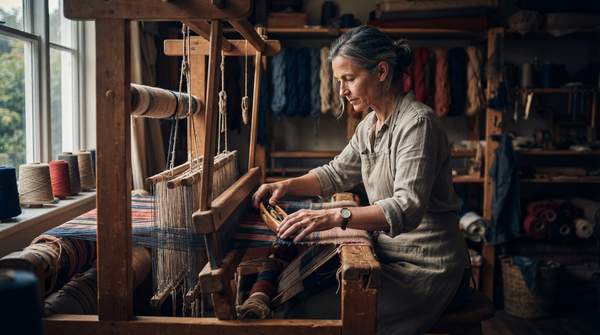
The grievances that motivated this opposition were specific. Proponents took issue with the industry's responsibility for pollution—both in the production of clothes and in the decay of synthetic fabrics—with poor workmanship, and with an emphasis on very brief trends over classic style. In response, the movement emphasized quality clothing that is more enduring, involving local artisans and the use of eco-friendly materials rather than globalized mass production.
The scale of the problem it confronted is measurable. Approximately 92 million tonnes of textile waste are generated every year, with most garments ending in landfills or incineration, and a large proportion of garments worn fewer than ten times before being discarded. These figures, cited in industry commentary on the movement's history, explain why slowing down fashion production systems came to be seen as essential rather than optional.
Defining Slow Fashion: Kate Fletcher's Foundational Principles
The clearest articulation of the term came from Kate Fletcher, writing in The Ecologist in June 2007, in the article widely credited with coining "slow fashion." Fletcher's argument was not simply a critique of speed but a proposal for a different vision of the industry in "the era of sustainability: where pleasure and fashion is linked with awareness and responsibility."
"Slow fashion is about choice, information, cultural diversity and identity. Yet, critically, it is also about balance. It requires a combination of rapid imaginative change and symbolic (fashion) expression as well as durability and long-term engaging, quality products."
Notably, Fletcher did not argue that everything in fashion must move slowly. Her model borrows from other "slow" applications—such as Slow Cities, which design with slow values within the context of a town and a commitment to citizens' quality of life—and combines rapid symbolic expression with durable, long-lasting products. That balance distinguishes slow fashion from a simple call to make fewer clothes.
Fletcher also framed the movement as relational. A strong bond of relationships forms, she wrote, which permeates far beyond the garment manufacturing chain, connecting designers, buyers, retailers, and consumers. In her formulation, slow fashion is "an opportunity for business to be done in a way that respects workers, environment and consumers in equal measure."