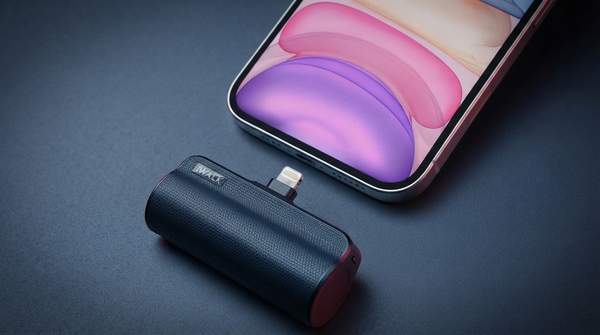
The right travel power bank comes down to three numbers and one hard boundary: total energy capacity in watt-hours, output power in watts, the ports your devices actually use, and the FAA's 100 watt-hour ceiling if you're flying. A power bank under 100Wh can go in your carry-on without airline approval, while anything between 101 and 160Wh needs approval and is capped at two spares per person. Everything else—how fast it charges, whether it can run a laptop, how many days it lasts—flows from those constraints and your own device list.
Understanding Power Bank Essentials for Travel
Power bank specifications can look like alphabet soup, but each unit answers a practical travel question. Volts measure electrical pressure—typically 3.7V for the battery cells inside and 5V for USB output, as outlined in NESTOUT's buying guide by Nancy Leighton. Amps measure current flow, and higher amps mean faster charging. Watt-hours represent total energy storage, calculated by multiplying mAh by voltage and dividing by 1000.
Why does this matter for travel? Because the specs interact with your real itinerary. Consumer Reports' portable charger coverage, authored by Courtney Lindwall, notes that larger-capacity power banks suit travelers who want to charge multiple devices at once or go several days between outlets. Wirecutter's Sarah Witman frames the same choice around habits: some people need only a small battery to boost a dying phone at day's end, while frequent travelers may need to power multiple devices over several days. Capacity, in other words, is not "bigger is better"—it's a match to trip length and device count.
Key Technical Specifications Explained
Capacity: mAh versus watt-hours. Most power banks advertise capacity in milliampere-hours (mAh), but mAh is a measure of charge, while watt-hours measure energy—and energy is what air travel rules are written in. The conversion is simple: multiply mAh by voltage and divide by 1000. A 20,000mAh power bank at 3.7V works out to roughly 74Wh, comfortably under the FAA limit. If the Wh rating isn't printed on the battery, the FAA instructs passengers to determine it by multiplying volts by amp-hours.
Charging speed: watts and Power Delivery. How fast a power bank refills your devices depends on its ports and maximum wattage output, according to Consumer Reports. USB Power Delivery (PD), a fast-charging standard over USB-C, can deliver up to 240 watts. One caveat: the device being charged must also support PD for that speed to materialize.
Ports. USB-C is now the most common option for both input and output, CHOICE's Peter Zaluzny writes, and you should only buy a power bank with Lightning or micro USB connections if you specifically need them for an older device. USB-A remains common on power banks for older gear, and ports on the same unit can carry different wattage ratings—check each one, not just the headline number.
Navigating FAA Regulations for Air Travel
The FAA's rules for airline passengers divide lithium-ion batteries into tiers. For rechargeable batteries under 100Wh, there are no quantity limits, provided they're for the passenger's personal use—batteries carried for further sale or distribution are prohibited. For lithium-ion batteries between 101 and 160Wh, the limit is two spare batteries per person, including power banks and portable chargers, and those larger batteries must be carried in carry-on baggage only, protected from damage and short circuit, with airline approval.
Two practical cautions follow from the official guidance. First, the FAA notes that many airlines, domestic and international, may impose stricter quantity and Wh limits on spare batteries regardless of capacity, so check with your carrier before flying. Second, the TSA states plainly that "the final decision rests with the TSA officer on whether an item is allowed through the checkpoint." One battery retailer's compliance overview adds that written airline approval for 101–160Wh units is typically requested three to seven days before travel, though it flags that window as a recommended airline practice rather than a hard deadline.
Your Personalized Power Bank Decision Framework
Work through these questions in order—regulatory compliance first, device compatibility second, total energy demand last. Each answer narrows your required specification profile.
| Step | Question | If yes | If no |
|---|---|---|---|
| 1 | Are you flying? | Capacity ceiling: under 100Wh for carry-on without airline approval; 101–160Wh only with approval, max two spares, carry-on only | No regulatory ceiling; capacity limited only by weight and bulk you'll carry |
| 2 | Will you charge a laptop? | Minimum one USB-C port supporting Power Delivery; check your laptop's required wattage against the port's rated output (PD can deliver up to 240W) | Phone and tablet charging works over USB-C or USB-A; match port type to your cables |
| 3 | Do you have older devices? | Add USB-A, or Lightning/micro USB only if specifically needed | USB-C alone may suffice |
| 4 | How many days between outlets, and how many devices? | Estimate total energy: convert your target capacity to Wh (mAh × V ÷ 1000) and stay under your Step 1 ceiling; multiple devices or multi-day trips point toward larger capacity | A smaller, pocketable unit giving one or two phone charges is enough |
The framework's output is a specific profile, not a brand. A traveler flying with a laptop on a three-day trip might land on: "I need a power bank under 100Wh with at least one 45W USB-C PD port." A weekend road-tripper charging only a phone could accept a larger capacity but needs far less output. The conditional logic matters because it prevents the two most common mistakes: buying capacity you can't fly with, or buying capacity you can't use because no port delivers the watts your laptop demands.
Matching Power Bank Features to Your Devices and Trip
Apply the framework to the three archetypal travelers the evidence describes. The commuter or day-tripper, in Wirecutter's framing, needs a wallet-sized unit for "those unexpected (yet critical) moments when your phone is dying and no outlets are nearby"—low capacity, modest output, one port. The weekend traveler wants one or more full smartphone charges in something that still fits a laptop bag or tote. The multi-day, multi-device traveler is the one Consumer Reports points toward larger-capacity models, and the one most likely to hit the FAA ceiling if flying.
Two trade-offs deserve weight in the final comparison. Higher capacity increases weight and bulk, which matters if the power bank lives in a day bag. And cheap very-low-capacity units under 3,000mAh, CHOICE cautions, may deliver only one phone charge "if you're lucky"—though plenty of capable models cost under $100, so a good fit doesn't require top dollar. Note that this guide covers power banks for phones, tablets, and laptops only, not larger portable power stations, and it deliberately recommends specifications rather than specific brands or models.
Making Your Informed Power Bank Choice
Select a portable power bank that aligns with your primary travel mode—especially FAA limits if you're flying—the power requirements of your most demanding device, and the total energy your trip duration demands. The measurable indicator of a sound choice is a power bank with a Wh rating under 100Wh, appropriate wattage output for your devices (for example, 45W for a laptop), and compatible port types such as USB-C PD, that fits your itinerary. Before you fly, verify the Wh marking on the unit itself and confirm your airline's spare-battery limits, since carriers may be stricter than the FAA baseline and the checkpoint officer makes the final call.
Sources
- Airline Passengers and Batteries — FAA
- 2026 Power Bank Buying Guide: What Specs To Look For — NESTOUT
- Best Portable Chargers for Phones and Laptops - Consumer Reports
- The Best Portable Chargers and Power Banks for Phones and Tablets — Wirecutter: Reviews for the Real World
- What to know before buying a power bank - CHOICE
- FAA: FAA notes that many airlines
- Lithium batteries with more than 100 watt hours — U.S. Department of Homeland Security Transportation Security Administration
- JM Lithium Battery Series 03:Can You Take Lithium-Ion Batteries on Airplanes? — JMBatteries