By 2026, 60% of K-Beauty product launches are expected to feature 'clean beauty' or 'sustainable' claims, according to Mintel. A profound re-evaluation of K-Beauty's appeal, shifting from fleeting trends to verifiable ethical and environmental standards, is signaled by 60% of K-Beauty product launches expected to feature 'clean beauty' or 'sustainable' claims. Consumer expectations and industry focus are fundamentally changing.
K-Beauty built its global reputation on innovative, multi-step routines and unique ingredients, but the market is now rapidly shifting towards 'skinimalism,' scientific validation, and environmental consciousness. This presents a tension: the very complexity and exoticism that defined its initial global appeal are now being challenged by a demand for simplicity and proven efficacy.
Brands integrating advanced biotech, proven actives, and genuine sustainability will dominate the K-Beauty landscape. Those clinging to past trends risk obsolescence, demanding a fundamental re-evaluation of product development and marketing.
The Maturing Face of K-Beauty: Efficacy Meets Efficiency
The global K-Beauty market is projected to reach $31.6 billion by 2029, growing at a CAGR of 9.8%, according to Grand View Research. This robust growth, however, shifts direction. 'Skinimalism' now influences 40% of K-Beauty consumers aged 25-34, who favor fewer, multi-functional products, as reported by GlobalData. The average K-Beauty routine has shortened from 10+ steps to 5-7 for 55% of consumers seeking efficiency, a shift noted by Allure Korea. The 30% decline in multi-step routine sales confirms K-Beauty's complex rituals are now a liability in Western markets. Brands must pivot aggressively towards 'skinimalism' or risk irrelevance. K-Beauty's growth now relies on discerning consumers seeking streamlined, effective routines over elaborate rituals.
Beyond the Hype: Key Ingredients Shaping 2026 Skincare
Bakuchiol, a plant-derived retinol alternative, shows a 300% increase in K-Beauty product formulations since 2023, according to Cosmetics Business. The 300% increase in Bakuchiol formulations signals a move towards gentler, effective anti-aging solutions. Focus on skin barrier repair ingredients like ceramides and peptides has also grown by 70% in K-Beauty product marketing, as reported by NielsenIQ, emphasizing foundational skin health.
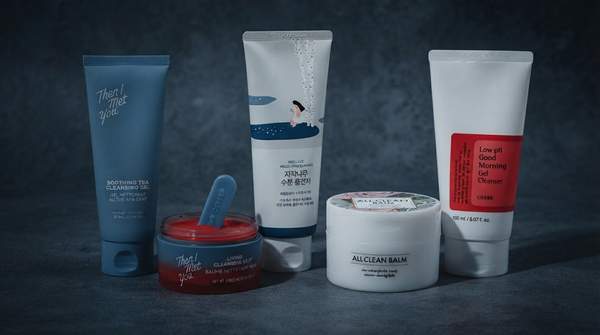
Probiotic and prebiotic skincare formulations, targeting the skin microbiome, are projected to be a $1.5 billion market segment in K-Beauty by 2026, according to Statista. Fermented ingredients also maintain popularity, with a refined focus on specific extracts with proven benefits and enhanced bioavailability. Traditional Korean ingredients like ginseng and mugwort are being re-evaluated for adaptogenic and anti-inflammatory properties, appearing in 25% more new products, notes K-Beauty Journal. Cica (Centella Asiatica) remains a powerhouse, with 85% of K-Beauty users recognizing its soothing benefits, notes Kantar Worldpanel. These established botanicals are now seen through a scientific lens, much like next-gen hyaluronic acid forms, which are incorporated into 30% of new hydrating serums for deeper penetration, based on Ingredient Supplier Data. The newest frontier includes biotech-derived ingredients like lab-grown exosomes and growth factors, emerging in high-end K-Beauty lines for enhanced efficacy, according to Future Market Insights. A 45% rise in AI-powered skin analysis apps in South Korea underscores the shift towards advanced science and data-driven solutions, tailoring the ingredient ecosystem, as reported by the Korea Herald. K-Beauty ingredients now blend scientifically validated actives, advanced biotech, and re-imagined traditional botanicals for targeted efficacy.
The Ethical Imperative: Transparency and Sustainability Drive Choice
Ingredient transparency and ethical sourcing are now top priorities for 75% of Gen Z K-Beauty buyers, according to WGSN, who demand clear information on product origins and production. Snail mucin, though popular, is increasingly replaced by vegan alternatives like plant-based mucin extracts due to ethical concerns, as noted in a Beauty Industry Report. The influence of dermatologists and scientific endorsements on K-Beauty product choices has increased by 50% among discerning consumers, paralleling this ethical shift and a growing demand for scientific validation, a finding from the Seoul Beauty Expo Survey. The search term 'vegan K-Beauty' has surged by 120% globally in the last two years, according to Google Trends. With 65% of K-Beauty consumers prioritizing scientific backing, brands failing to invest in rigorous clinical trials and transparent ingredient sourcing face an existential threat. Consumer trust now shifts from novelty to verifiable efficacy, making ethics and transparency as critical as product performance.
The Future is Clear: Sustainable, Smart, and Science-Backed
K-Beauty's evolution signals a mature, responsible industry. Waterless or concentrated formulas gain traction, reducing environmental impact and increasing potency, according to CosmeticDesign-Asia, aligning with consumer demand for efficient products with a smaller ecological footprint. A quarter of K-Beauty brands now invest heavily in recyclable packaging and refillable options, as reported by the Eco-Beauty Alliance. The significant 15-25% COGS increase for sustainable transitions suggests smaller K-Beauty brands will struggle to compete ethically. This will likely lead to market consolidation among larger players who can absorb these costs and dominate the 'clean beauty' segment by Q3 2026.