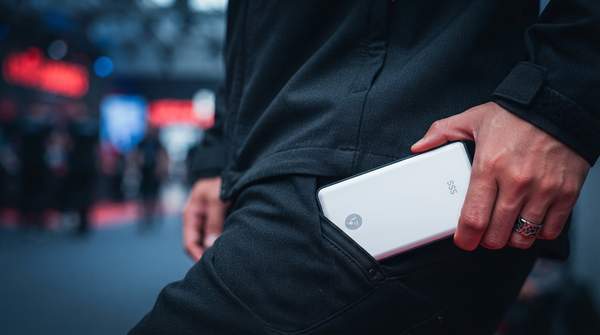
Belkin's UltraCharge wireless charger refilled an iPhone 16 Pro Max by 46% in just half an hour. This speed, once exclusive to wired connections, now redefines convenience, allowing quick power-ups without physical tethering.
USB charger power outputs are consistently rising. However, the most significant advancements now lie in specialized features and form factors, not just raw wattage. This shift prioritizes user experience over raw power.
As device ecosystems diversify, the market will increasingly favor tailored charging solutions. Generic high-wattage bricks will become a commodity.
The Baseus PicoGo AE11, named 'best overall' by The Guardian, delivers 67 watts across two USB-C ports and one USB-A. This balanced approach to power and versatility addresses modern multi-device demands, rather than simply maximizing wattage.
Powering Up: The Numbers That Matter
- 140W — The Anker Prime A110A features two USB-C Power Delivery (PD) ports that deliver up to 140 watts (W) apiece, according to The New York Times.
- 22.5W — The same Anker Prime A110A also includes a USB-A port capable of outputting up to 22.5 W.
- 97Wh — The Anker Prime A110A has a rated capacity of 26,250 milliamp-hours (mAh), or roughly 97 watt-hours (Wh).
- 1.3 pounds — This power bank weighs 1.3 pounds.
The Anker Prime A110A exemplifies the trade-offs in high-capacity portable charging: immense power (140W per USB-C, 97Wh capacity) for demanding devices, but at a substantial 1.3-pound weight. While raw power is available, portability remains a critical design challenge for universal solutions.
Top Picks for Every Charging Need
1. Baseus PicoGo AE11
Best for: Everyday versatility and balanced power
This $29.99 charger delivers 67 watts total output across two USB-C ports and one USB-A port. The Guardian named it 'best overall' despite reaching a 152F (67C) hotspot under full load.
2. Anker Prime Charger (160W, 3 Ports)
Best for: High-power multi-device desk charging
This charger provides 160W total output across three ports. It recharges an Anker Prime Power Bank up to 150W in AI Mode 2.0, according to anker. It is 70% smaller than three original chargers and integrates advanced ActiveShield 4.0 safety, performing over 10 million temperature checks daily. Its higher price reflects these premium features.
3. Anker Prime A110A
Best for: Demanding laptop and multi-device portable charging
This power bank features two USB-C PD ports delivering up to 140W apiece, alongside a USB-A port outputting up to 22.5W. Its large 26,250 mAh capacity supports extended use, though its 1.3-pound weight impacts portability.
4. Alogic Roam
Best for: Laptop charging with integrated convenience
This power bank includes a built-in USB-C cable with up to 65W input and 100W output. It adds two more USB-C PD ports (one up to 65W input/100W output, one up to 18W output), as reported by The New York Times. Its 21,000 mAh capacity and integrated cable reduce clutter.
5. Anker Prime 67W GaN Wall Charger
Best for: Portable multi-device charging
This charger offers 67W total output across three ports and features a foldable U.S. and U.K. plug. Macworld described it as the smallest multiport charger, prioritizing compact size for travel. Total output is split across its three ports.
6. Ugreen Nexode Pro 65W
Best for: Ultra-light multi-device travel charging
Macworld described this as the lightest multiport charger, providing 65W total output through three ports and a foldable U.S. plug. Its minimal weight makes it ideal for users prioritizing portability, though its total output is slightly lower than some competitors.
7. Anker 1383 Power Bank
Best for: Everyday portable charging with integrated cable
This power bank features a built-in USB-C cable and a USB-C PD port supporting up to 65W apiece, plus a USB-A port supporting up to 18W, according to The New York Times. It has a 20,000 mAh capacity and weighs 1 pound.
8. Rolling Square Supertiny
Best for: Minimalist, high-speed single-device charging
Macworld reported this as a single-port 65W wall charger with a foldable U.S. plug. Its design focuses on delivering high power in an exceptionally small footprint, at the expense of multi-device capability.
9. Anker 511 Nano 3
Best for: Ultra-portable budget phone charging
The Guardian recommended this as the best budget USB charger. It provides up to 30W through a single USB-C port, delivering 50% more power than typical 20W chargers at just 0.08lbs, and costs $15.99. Its single port limits use to one device, unsuitable for laptops.