Beauty

Beyond the Algorithm: Decoding the Impact of AI Integration in Beauty Technology

The most significant shift in beauty isn't a new ingredient; it's the underlying code. With reports that almost 60% of product discovery now happens on AI platforms, brands are in a race to adapt to a new technological reality.

SM
Stella Moreno

April 3, 2026 · 7 min read

Futuristic beauty lab with holographic displays of AI algorithms and cosmetic formulas, symbolizing AI's deep integration into beauty product development and consumer discovery.

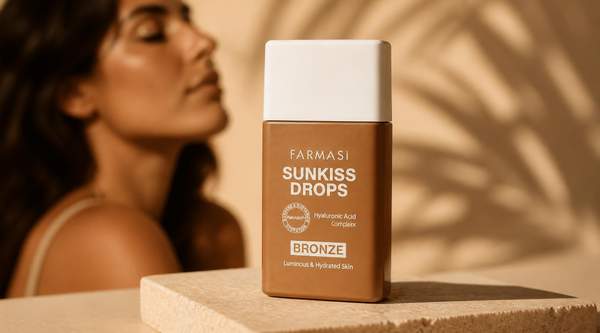
The journey to find the perfect foundation shade once involved a department store, harsh lighting, and a series of hopeful stripes on a jawline. Today, for many, it starts with a question posed to a chatbot. The most significant shift in beauty isn't a new ingredient or a viral makeup hack; it's the underlying code. According to a recent report from Glossy, almost 60% of product discovery is now happening on large language models (LLMs) like ChatGPT and Google. This single statistic signals a fundamental rewiring of the consumer path to purchase, a change that brands are scrambling to navigate.

From the chemical composition of a new serum to how a customer discovers it on their smartphone, artificial intelligence is now central to the beauty industry’s consumer experience, product development, and market strategy. This integration of AI is not merely an incremental update; it fundamentally shifts how brands understand, engage, and innovate for a digitally native audience, moving far beyond back-office optimization.

The New Face of the Market: Quantifying AI's Footprint in Beauty

The market for AI in beauty and cosmetics, valued at approximately $3.27 billion in 2023, is projected to reach $8.1 billion by 2028, expanding at a compound annual growth rate (CAGR) of 20.1%, according to Firework. This data paints a clear picture of an industry in the midst of a technological metamorphosis, indicating AI's integration is a measurable, high-growth reality and a foundational layer for future industry development.

Looking further ahead, the specific market for AI beauty personalization platforms is forecast to reach USD 16.4 billion by 2036, growing at a sustained 21.7% CAGR, as reported by Morningstar. This sustained, aggressive growth points to personalization as the key value proposition that AI unlocks. The strategic imperative for brands is clear: the future of customer loyalty and market share will be heavily influenced by the sophistication of their AI-driven personalization engines. The scale of this transformation is perhaps best captured by a McKinsey report cited by Firework, which predicts that AI-driven tools are expected to influence up to 70% of all customer interactions in the beauty sector by 2027. This suggests that in just a few years, a brand's AI strategy will be nearly synonymous with its customer service and engagement strategy.
Why This Is Happening: The Drivers Behind AI Integration Trends in Beauty Technology

AI's rapid adoption in the beauty industry is a direct response to a confluence of powerful market forces and evolving consumer behaviors, rather than technology for its own sake. These strategic implications demand a closer look at their root causes.

Consumers now demand personalized recommendations, virtual try-on experiences, and tailored solutions for their unique skin type, tone, and preferences, moving far beyond one-size-fits-all models. AI is the only scalable technology capable of delivering this level of individualization. By analyzing vast datasets—from selfies and purchase history to environmental data—AI algorithms provide product matches and skincare routines with a degree of precision previously unimaginable. This shift from mass marketing to mass personalization represents the central pillar supporting AI's rise.

Nearly 60% of product discovery now occurs on LLMs, marking a seismic event for brand marketers. For decades, brands controlled the discovery narrative through advertising, retail placement, and influencer marketing. Now, the initial point of contact is often an algorithmically generated response to queries like 'What's the best vitamin C serum for sensitive skin?' This forces brands to rethink their entire SEO and content strategy. It's no longer enough to be visible on Google's first page; brands must ensure their products are understood, categorized, and recommended by AI models, requiring a technical marketing approach grounded in data structure and algorithmic compatibility.

L’Oréal, for example, holds a reported 14,500 terabytes of data, according to BeautyMatter, encompassing decades of research on skin and hair, consumer feedback, formulation data, and clinical trial results. This sheer volume of available data makes manual parsing for insights impossible, thus making AI a necessity. AI provides the computational power to identify patterns, predict ingredient efficacy, and connect consumer needs with scientific innovation, transforming this massive data trove into a strategic asset for product development and marketing.

Who's Affected: How AI is Transforming Personalized Skincare Solutions

The impact of AI integration in beauty technology is not abstract; it is visibly reshaping the strategies of both heritage conglomerates and nimble disruptors. These companies are not just experimenting with AI but are actively embedding it into their core operations, from R&D labs to consumer-facing apps.

L’Oréal stands as a prime example of a legacy brand leveraging AI at scale. The company uses artificial intelligence for both consumer tools and internal processes. Its Beauty Genius is an AI-powered personal beauty advisor, offering diagnostics and recommendations. Internally, AI is being used to sift through its massive data reserves to improve and accelerate formulation development. A specific, widely adopted application is the Lancôme Foundation Shade Finder, an AI-powered tool that analyzes a user's skin tone through their phone camera to provide a precise foundation match. This directly addresses a major consumer pain point—finding the right shade—while reducing returns and building brand trust.

On the disruptor side, E.l.f. Beauty has embraced AI as a core part of its agile, digitally-focused strategy. The company reportedly uses artificial intelligence and LLMs like ChatGPT not just for marketing but for market intelligence. According to Glossy, E.l.f. has developed an internal team specifically tasked with making its products more visible and discoverable to LLMs. This team uses AI to scrape the web for data, understanding the language customers use in searches and reviews to ensure E.l.f. products surface in relevant AI-generated recommendations. This proactive approach demonstrates a deep understanding of the new discovery ecosystem.

Retailers are also making significant moves. Sephora announced a major integration between its app and ChatGPT, designed to bring a new level of personalization to its reported 80 million loyalty members. This move signifies a high level of trust in AI's ability to handle sensitive customer data and deliver a valuable experience. It bridges the gap between a customer's broad beauty queries and Sephora's specific product catalog, creating a guided shopping journey powered by conversational AI. These virtual try-on technologies, which integrate AI and augmented reality, are becoming standard, allowing customers to test everything from lipstick shades to hairstyles from their phones, which in turn enhances satisfaction and demonstrably reduces return rates.

What Comes Next: The Future of AI Integration in Beauty Technology

As AI technology continues to evolve, its applications within the beauty industry are set to become even more sophisticated and integrated. The current wave of personalization and discovery tools is just the beginning. The next phase will likely see AI moving deeper into the scientific and predictive aspects of beauty.

One of the most promising frontiers is in product formulation. Generative AI is predicted to dramatically speed up the research and development cycle. Guive Balooch, L’Oréal’s Global Vice President of its Tech Incubator, noted in an interview with BeautyMatter that generative AI can accelerate molecule discovery and help identify optimal molecular structures for new ingredients. "The ability for us to find these molecules much faster, I think, is really exciting," he stated. This could shorten the time-to-market for innovative new products from years to months.

Personalization will also become more dynamic and predictive. Future AI systems will not just recommend products based on a current selfie but could integrate data from IoT devices—like smart watches or environmental sensors—to offer real-time advice. The convergence of IoT and AI in cosmetic health offers significant potential for preventive care, suggesting routines or products based on factors like UV exposure, pollution levels, or even sleep patterns. Generative AI is also expected to enable more nuanced and creative recommendations for hair color and complex skincare regimens, moving beyond simple product matching to holistic lifestyle coaching.

However, this rapid integration is not without its challenges. The industry is already facing claims of "AI-washing," a term highlighted by Allure, which suggests some brands may be overstating or misrepresenting their use of AI as a marketing gimmick. As consumers become more tech-savvy, brands will need to ensure their AI claims are backed by genuine functionality and tangible benefits. Building and maintaining consumer trust, especially regarding data privacy and algorithmic bias, will be paramount for long-term success.

Key Takeaways

  • The AI beauty market is experiencing explosive growth, with AI-driven tools projected to influence up to 70% of customer interactions by 2027, making AI strategy a critical component of brand survival and growth.
  • Product discovery has fundamentally shifted, with reports indicating nearly 60% now happens on LLMs like ChatGPT. This requires brands to adopt new, technically-focused strategies to ensure their products are visible and recommended by algorithms.
  • Major brands like L'Oréal, E.l.f. Beauty, and Sephora are integrating AI across their operations, from accelerating R&D and product formulation to powering hyper-personalized consumer tools like virtual try-on and shade finders.
  • The future of AI in beauty points toward accelerated innovation through generative AI in molecule discovery and more dynamic, predictive personalization that may incorporate real-time data from IoT devices for preventive care.