What is smart home device integration and why does it matter for your seamless user experience?

Setting up multiple smart home devices once meant scanning QR codes one by one, a tedious process.

VH
Victor Hale

April 16, 2026 · 3 min read

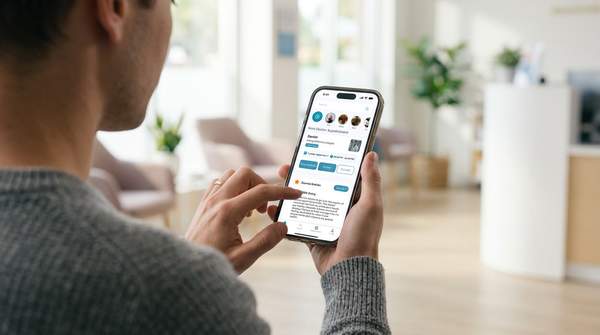
A modern living room showcasing integrated smart home devices, illustrating the concept of seamless user experience and effortless control.

Setting up multiple smart home devices once meant scanning QR codes one by one, a tedious process. Matter's 1.4.1 specification changes this, allowing a single QR code to configure an entire room's worth of compatible gadgets. This innovation transforms initial smart home setup from a device-by-device chore into instantaneous, system-wide integration. Smart home devices promise convenience, but their initial setup has often been frustrating. Matter's new features directly address this friction, aiming to lower the barrier to entry and make connected homes truly seamless for average users.

Matter's 1.4.1 specification introduces multi-device QR codes and NFC onboarding, drastically simplifying smart home setup, according to The Verge. Multi-device QR codes configure multiple devices of the same type simultaneously, eliminating repetitive steps. NFC onboarding allows tap-to-pair functionality. These innovations directly tackle smart home adoption's most frustrating aspects, shifting design philosophy from individual device pairing to room-level integration from the first interaction.

How Does Matter Connect Smart Home Devices?

Matter runs on standard IP networking, supporting Wi-Fi, Ethernet, or Thread, according to datawiresolutions. Thread is IP-addressable via IPv6, allowing direct pairing with Matter. This IP-based architecture creates a robust, responsive, and integrated system. While Matter over Thread offers a typical latency of around 100 ms, this technical detail is likely irrelevant to the average user. The smart home's next growth phase will be driven by frictionless user experience, not marginal performance gains.

Benefits of Integrating Smart Home Technology

The smart home market offers diverse devices, from smart plugs to security cameras. Consumers face the challenge of making these disparate devices work cohesively. Matter's multi-device QR codes, NFC onboarding, and IP-based architecture (Wi-Fi, Thread) provide not just easier setup, but a fundamentally more robust system. This combination shifts the smart home market from an ecosystem battle to competition based purely on device quality and features. Premium brands must now justify their price tag on merit, making seamless integration a key differentiator over proprietary convenience.

Premium Options for Smart Home Hubs and Displays

As the smart home ecosystem matures, consumers will see more expensive, feature-rich hubs. Apple could charge around $350 for a home hub, according to macrumors. A new smart display is also expected to have a $350 price tag, forbes reports. These premium devices aim to become central command centers, offering advanced control. While Matter 1.4.1 radically simplifies setup with multi-device QR codes and NFC onboarding, as The Verge notes, the financial barrier remains. Reports from macrumors and forbes on potential $350 Apple devices suggest true interoperability might still require investment in higher-cost hardware.

Your Smart Home Questions Answered

Can smart home devices from different brands work together?

Yes, Matter enables interoperability between devices from different manufacturers. A smart bulb from one company can communicate directly with a smart switch from another, provided both support Matter. This allows users to build a cohesive system without being locked into a single brand.

What makes a smart home hub effective for integration in 2026?

An effective smart home hub in 2026 supports the Matter standard and acts as a Thread Border Router, bridging Thread devices to your Wi-Fi network. This allows seamless communication between various device types and brands, simplifying setup and daily operations. Many existing Wi-Fi routers and smart displays are being updated for this role.

How do Matter's new onboarding features simplify smart home setup?

Matter 1.4.1 introduces multi-device QR codes and NFC onboarding. A single QR code can now provision multiple compatible gadgets in a room, while NFC allows instant pairing by tapping a smartphone to a device. This dramatically reduces installation time and frustration.

By 2027, if manufacturers like Apple, with its potential $350 home hub, fail to fully embrace Matter 1.4.1's simplified setup, they will likely struggle to compete in a market prioritizing user experience over proprietary lock-in.